
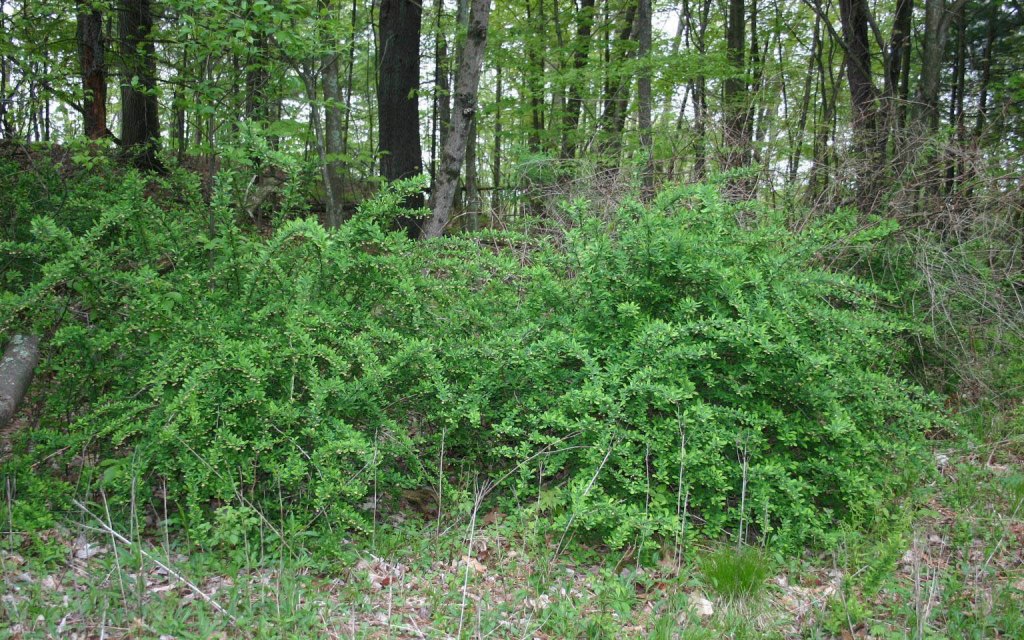
I would never admit to having taken a walk through the meadow, that would be trespassing. But if I had taken a walk through it I would have trudged through mud, ducked under radio tower cables, brushed against brambles, bushwacked through some invasive shrubs, hit my head on a giant grape vine, met a few deer ticks, slipped on a hill of crumbling asphalt mixed with dirt, and wound up stuck with the decision of whether to scale the 87 degree incline up to Haviland Street or just meander through Highland West’s mushy lawn and hope no one noticed.
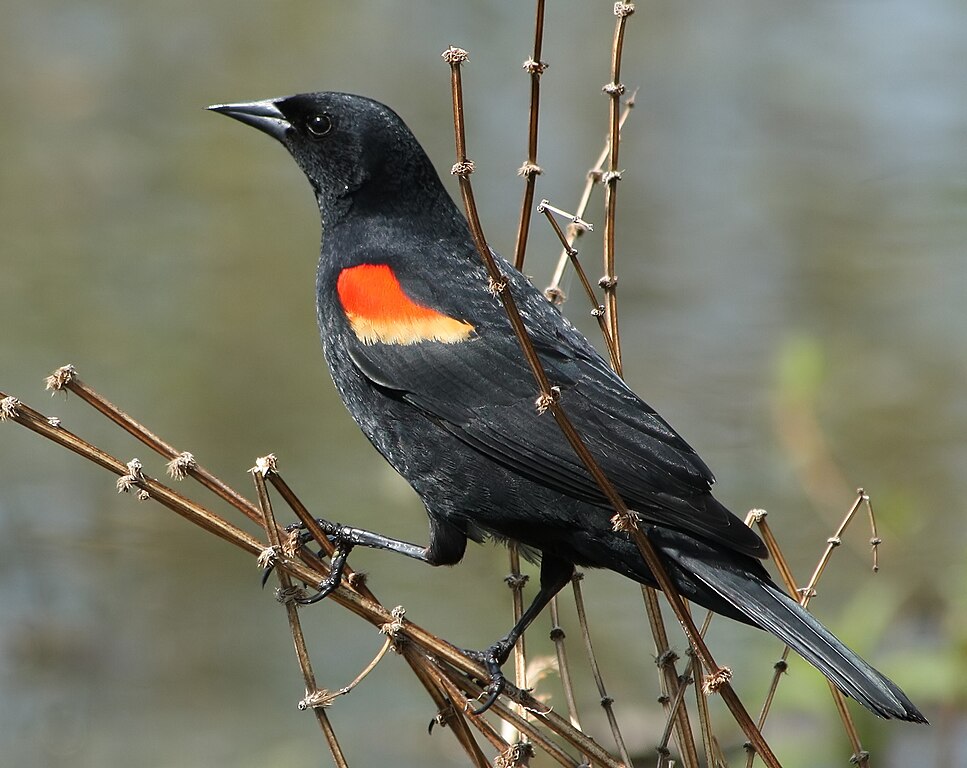
But I would have also gotten to hear the concentrated call of dozens of red wing blackbirds, more than I’ve ever heard at once at Institute or Elm Park. When I moved to Germain Street in 2018, I did not understand why my backyard had red wing blackbirds at all. Or why a moose appeared out my kitchen window one late September morning. The answer was that swamp back there at the end of Newton Ave, somewhat of a neighborhood secret. There is only a little bit left intact, one nice muddy puddle of a wetlands that- according to one person I know involved in state development planning- could be filled in as long as it was “made up for” somewhere else.
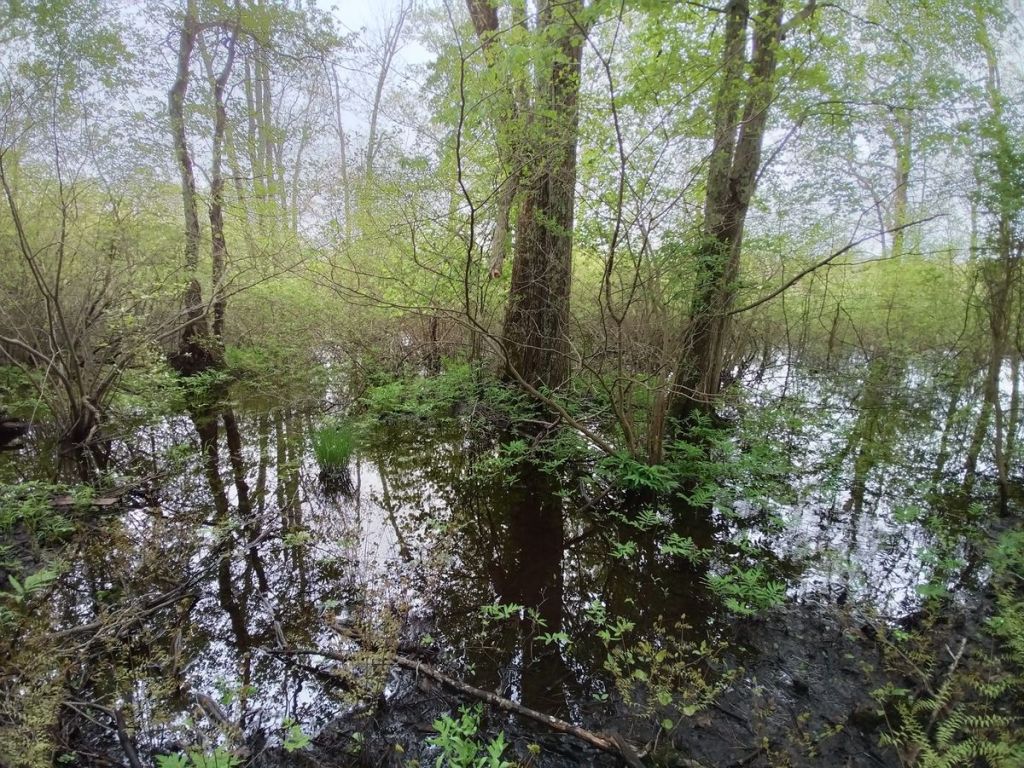
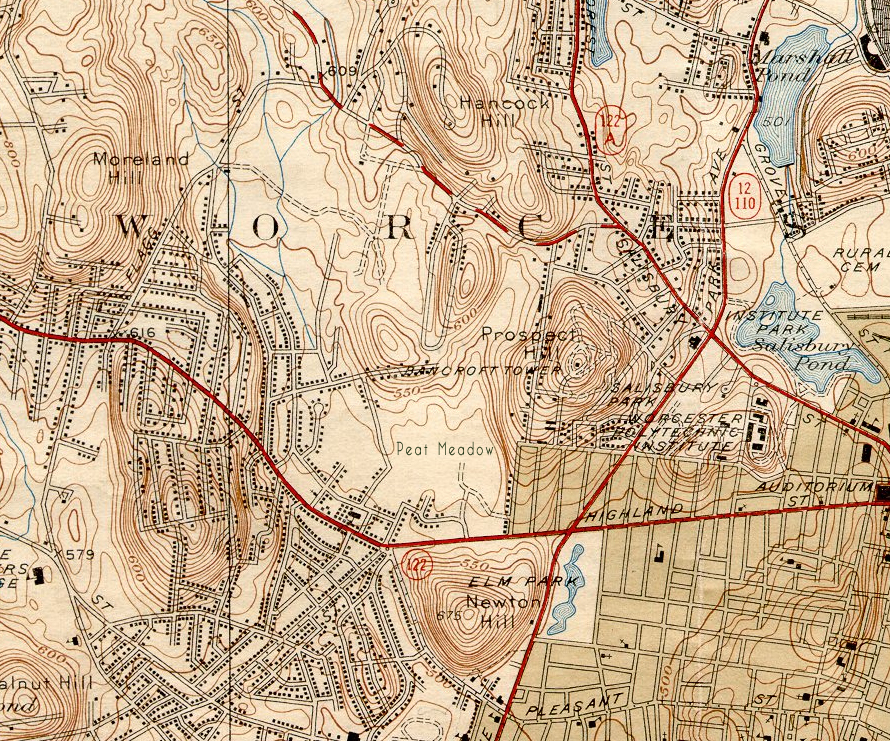
Peat Meadow once spanned from Haviland Street to Chalmers Road. With additional peaty areas around Kinnicutt Road and a former Peat Pond that extended to Richmond Ave. Most of this area was “filled” with who knows what. In 19th century Boston, they moved the glacial till from their drumlins one cartload at a time to fill in the marshy land that is now Back Bay. Beacon Hill was originally twice its size, but was used as material to fill the Bullfinch Triangle.

Worcester kept its hills, but was just as swampy as Back Bay, and eventually just as much in need of more buildable land. By the late 19th century, our drumlins were covered in houses, so instead of till we used coal ash, the rubble from old buildings, and whatever else no one knew what to do with. Suburban Road, Newton Square, the Valley between Valley Hill and Prospect Hill- these (among many other areas) were all filled.
After all the filling, most of Peat Meadow became houses, with Wetherell Park and the 3-5 Suburban Road area as exceptions. But this was not entirely because they weren’t filled as well. They were just too wet to dry out. Parts of 3 Suburban Road in particular must have been especially wet. So much was dumped on it that a recent geotechnical test pit exploration gave up at 12 feet, unable to determine just how deep all the debris actually goes. It’s a bit gross. But even with the debris in there, the land serves a very crucial function- that of flood water mitigation.
Under the mounds of urban fill is water, and a lot of it. Water comes off of Prospect and Valley Hills as both runoff AND in underground springs. It’s entirely possible water bubbles up through the ground right IN peat meadow, we wouldn’t really notice. But that lawn is squishy even days after it’s rained. And grapes don’t grow just anywhere. If 3 Suburban Road were to be developed, it would necessitate the diversion of water elsewhere. Exactly HOW much is anyone’s guess, but if even just half of the 16.5 acres in question are absorbing a constant inflow of groundwater, it would be difficult to make up for that somewhere else. Peat can absorb 20 times its weight in water. Paving over the land would prevent it from absorbing water from runoff, and water from a heavy rain would find itself headed downhill toward Newton Square and Park Ave. Structures sitting on top would also compress the peaty soils that sit underneath, preventing them from absorbing water from below (not to mention causing everything to sink, but that’s a story for another day).
Alterntively, the developers could remove the fill AND peat and replace it with some other fill which wouldn’t absorb water from any direction. Or they could mix the peat with concrete or some kind of polymeric substance and create similar issues. There are plenty of solutions for BUILDING there, some better than others as far as longevity, but there isn’t really a good one for those of us that already live here.
And that is why Peat Meadow is really worth saving- because building here would be putting homes from Russell Street to Coolidge Road, from Highland to Valley Hill Drive, and the entire Highland West Apartment building at risk of flood and foundation damage. And that’s not even a worse-case scenario when it comes to floods, nor does it take into account what might really be washing into our basements along with the water (again, a story for another day).
Much better than playing guessing games with what would be needed in terms of concrete detention basin capacity should the peat be “modified,” would be to allow Peat Meadow to function the way it is supposed to function. It would be preferable to leave it as is than to have it developed, but we can do better. It should be cleaned up because it has a job to do, and it might as well do it well. And we might as well be able to enjoy spending time in there as much as the red wing blackbirds do.
 savepeatmeadow.org
Leave a comment